
Understanding the Wolverine Stack Benefits
People use the term Wolverine Stack to describe combining BPC-157 with TB-500-two investigational peptides discussed in recovery and tissue-support circles. Interest often comes from proposed, complementary roles in repair-related biology; however, you should still separate research discussion from proven human outcomes. (fda.gov)
Patient-safety notice: This content is informational and is not medical advice. The FDA has not approved BPC-157 and TB-500 as drugs for human use. If you’re considering any peptide-related approach for a health concern, talk with a licensed clinician about risks, alternatives, and eligibility; additionally, we offer paid consultations with a licensed medical professional.
Ready to get started? Buy Wolverine Stack peptide now.
Quick overview: what people mean by Wolverine Stack
- What it is: People commonly pair BPC-157 + TB-500 in research discussions about repair-related pathways.
- Why the nickname exists: Wolverine is pop-culture shorthand for fast regeneration; therefore, the name works as marketing language, not proof of benefit.
- What it’s not: It isn’t an FDA-approved treatment, and large, controlled human trials have not confirmed recovery or injury outcomes.
What is the wolverine stack (BPC-157 + TB-500)?
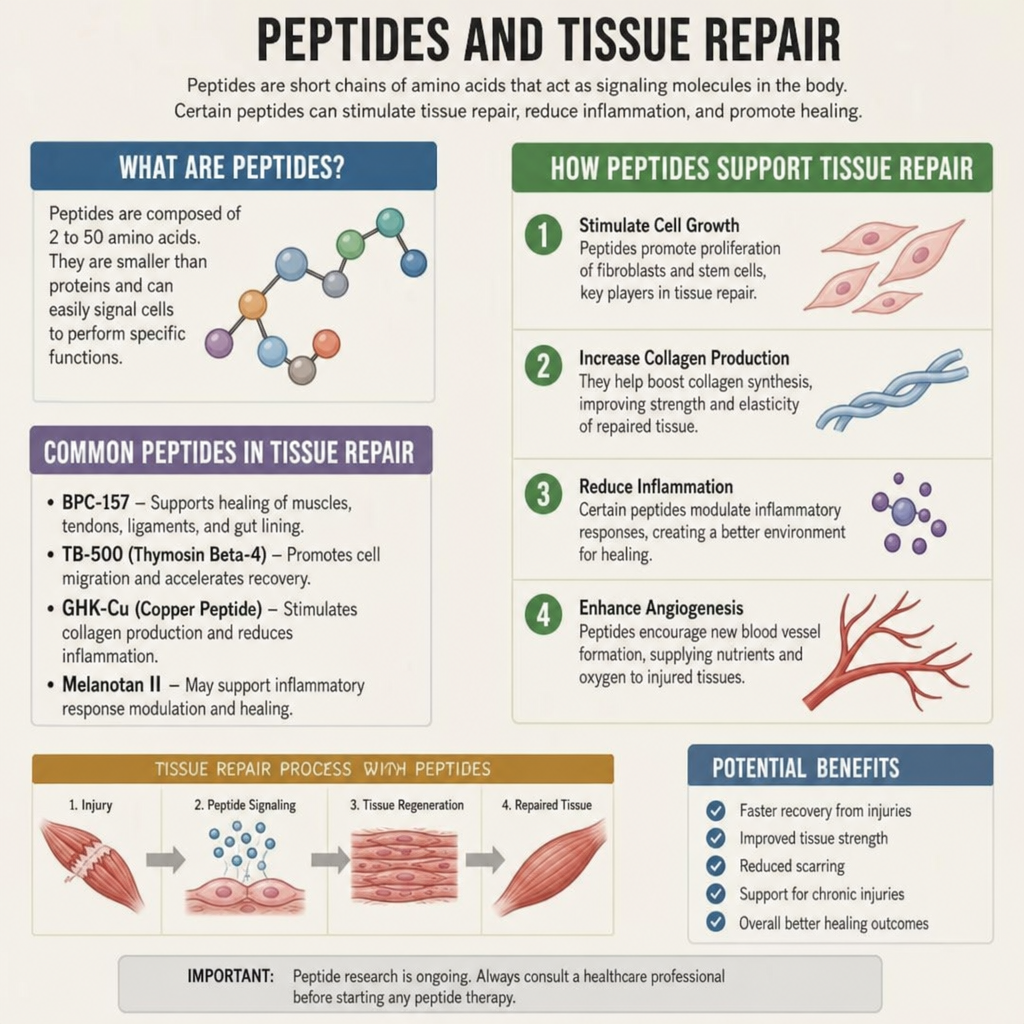
The wolverine stack usually refers to a BPC-157 and TB-500 combination discussed in mechanistic conversations about tissue repair and recovery biology. Researchers have studied BPC-157 mostly in preclinical models with limited human evidence. Meanwhile, researchers often describe TB-500 as a thymosin beta-4 fragment connected to cell migration and tissue remodeling. (pubmed.ncbi.nlm.nih.gov)
Interested in Wolverine Stack peptide? Buy now.
What benefits are researchers investigating?
In informal summaries, people often associate BPC-157 with research interest around:
- Recovery and tissue support
- Muscle and tendon wellness
- Supporting the body’s natural healing processes
- Inflammation-related support
When people stack it with TB-500, they typically point to two ideas. First, they link BPC-157 to local tissue-protection signaling. Second, they link TB-500-related thymosin beta-4 research to cell migration, angiogenesis, and extracellular matrix activity. As a result, many claim the combo could overlap in function; still, large, controlled human trials have not confirmed synergy. (mdpi.com)
Proposed mechanisms (research context)
- Angiogenesis: supporting new blood-vessel formation needed for repair.
- Fibroblast activity: helping build and organize connective tissue.
- Cell migration: encouraging repair-related cells to move toward damaged areas.
- Inflammation modulation: potentially influencing the intensity and duration of inflammatory signaling.
- Matrix remodeling: affecting collagen and structural proteins as tissue rebuilds.
The evidence is promising but early
Most support for the wolverine stack comes from laboratory, animal, and mechanistic studies rather than modern clinical trials. For example, a small retrospective knee-pain report involving BPC-157, alone or with TB4, exists; however, that design cannot prove cause and effect the way randomized trials can. In addition, FDA briefing materials noted limited human exposure data for TB-500-related drug products, which leaves a major gap for safety and effectiveness evaluation. (pubmed.ncbi.nlm.nih.gov)
Safety, legality, and quality should come first
You should not treat BPC-157 or TB-500 like routine supplements. FDA materials highlight concerns around peptide impurities, aggregation, immunogenicity, and limited safety information; moreover, compounded drugs are not FDA-approved and do not go through the same premarket review for safety, effectiveness, or quality. Athletes also face another issue: USADA states BPC-157 is prohibited under WADA’s non-approved-substances category, and WADA materials list thymosin beta-4 derivatives such as TB-500 among prohibited growth-factor-related substances. (fda.gov)
FAQS
Is Wolverine Stack FDA-approved?
No. The FDA has not approved BPC-157 and TB-500 as treatments for human use.
Can you provide dosing instructions?
No. These are investigational compounds, and dosing guidance is not appropriate outside a clinician’s supervision.
Can athletes use these compounds?
Many sport organizations prohibit BPC-157 and thymosin beta-4 derivatives (including TB-500). If you compete, verify current rules before considering anything related to these substances.
Ready to order Wolverine Stack peptide? Buy now.
The practical takeaway
The wolverine stack draws attention because its proposed mechanisms align with repair sequences researchers study: signaling, cell movement, blood-vessel support, and tissue remodeling. Still, the gap between mechanistic promise and proven human treatment remains wide. In short, keep expectations realistic, avoid hype-driven claims, and consult qualified professionals when making health decisions.
U.S Manufactured
Wolverine Stack
Purchase Wolverine Stack
This page is for educational and informational purposes and is not medical advice.